

The Role of the Military and the Border Patrol
While military personnel are stationed at the border, they are primarily focused on surveillance, detection, and intelligence gathering. These efforts are aimed at providing support to civilian law enforcement agencies, such as the US Border Patrol, which carries out detention activities.
Guillot emphasized that active-duty forces are not authorized to detain illegal migrants but are instead tasked with monitoring and turning over critical intelligence to law enforcement.
He further stressed that military personnel are equipped with the necessary training on the legal limitations set by the Posse Comitatus Act, which restricts military involvement in domestic law enforcement activities.
A notable risk emerging from this heightened security is the potential for attacks from cartel-operated drones. US officials have raised alarms over the increasing use of drones by criminal organizations to target US personnel.
Mexican cartels are using more and more drones in their clashes with rivals.
Here is a recent example of the “El Tena” group striking a CJNG cartel armored vehicle in Chinicuila
— Visegrád 24 (@visegrad24) March 10, 2025
Guillot has requested that military forces be authorized to shoot down these drones to protect personnel and prevent threats from escalating.
Rising Global Influence in the Western Hemisphere
The US military’s expanded presence at the southern border is part of a broader strategy to address not only internal security concerns but also the geopolitical dynamics of the region.
Gen. Guillot noted the challenges posed by Mexican cartels, which are increasingly utilizing new methods to smuggle people and narcotics into the US.
The tightening of border security has triggered a violent struggle among these cartels, as they attempt to regain their economic foothold in the face of mounting crackdowns from both the US and Mexico.
Simultaneously, the US is also dealing with the growing influence of global powers in the region.
Adm. Alvin Holsey, commander of US Southern Command (SOUTHCOM), highlighted the increasing presence of China and Russia, particularly in strategic areas like the Panama Canal.
China’s Belt and Road initiative, which includes infrastructure investments across Latin America, has raised concerns about Chinese influence over critical chokepoints such as ports and airfields in the region.
Holsey stressed the importance of maintaining a strong US presence to counteract these efforts and ensure regional stability.
.@USNorthernCmd Commander Gen. Guillot and @SouthCom Commander Adm. Holsey tell @RepMikeRogersAL that the current DoD acquisition system is NOT getting them what they need when they need it.
We must reform our acquisition system to ensure our warfighters have what they need to… pic.twitter.com/5wmbTEjQQB
— Armed Services GOP (@HASCRepublicans) April 1, 2025
Drug Interdiction and Regional Cooperation
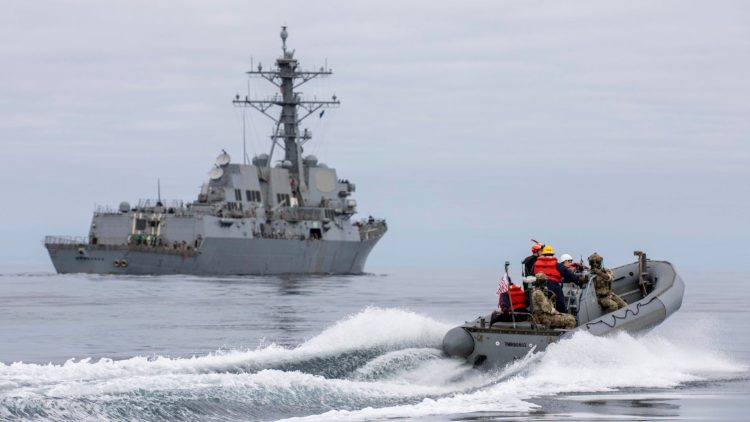
A significant focus of the expanded US military presence is drug interdiction.
The US has partnered with numerous Latin American countries, including Colombia, to curb the flow of illicit drugs into the US.
The military’s role in drug interdiction has seen success, but more resources are needed to improve the efficiency of these operations.
Holsey mentioned that US forces are only able to engage 10 percent of what they observe, and more ships, aircraft, and intelligence assets are required to increase interdiction rates.
The increase in coca production in Colombia, which has seen a 50 percent rise in output, has further complicated these efforts.
Cartels have exploited the situation, making it harder for local governments to combat the trade effectively.
Holsey emphasized that US partnerships in the region, particularly with Colombia’s military, remain crucial to countering these challenges.
You can watch the full hearing on US Military Posture and National Security Challenges in North and South America below!
Conclusion
The US military’s bigger presence at the southern border and at sea is a big change in how the US handles security and regional issues. Early results, like fewer illegal crossings, are promising, but long-term success depends on working with international partners, providing enough resources, and balancing security with humanitarian concerns.








COMMENTS