



Was this a failed attempt at modernization, or was it all part of a slow-roll strategy to sidestep political pressure and avoid decommissioning a ship that still carries 120 missiles?
Either way, it doesn’t look good.
The “Get Real, Get Better” Initiative: A Misguided Attempt?
Now, let’s talk about “Get Real, Get Better” (shorten GRGB).
The Navy introduced this initiative in 2022 to push for a culture shift, focusing on better leadership and problem-solving.
“Get Real, Get Better” is a call to action for every Navy leader to apply a set of Navy-proven leadership and problem-solving best practices that empower our people to achieve exceptional performance. —US Navy website
The idea is to empower sailors and leaders to identify problems, embrace the “red” (military speak for challenges or failures), and work through issues proactively.
Sounds good, right? Well, not so fast.
Critics argue that GRGB is just a repackaged version of old management principles, like Total Quality Management (TQM) from the ’90s.
Why should sailors need to “buy into” basic leadership and accountability? These should be foundational values, not something that needs a catchy slogan to promote.
If we’re being honest, it feels like a solution dreamt up by someone who’s never had to scrub a deck or stand watch in the middle of the night.
Leadership Failures: The Stories of the USS Essex and USS Boxer
We’ve got more than a few examples of where things are going wrong.
Take the USS Essex (LHD-2), for instance. It’s embarrassing to think that hundreds of electrical test sets were just tossed into a pile with no inventory control.
This isn’t just about sloppy work; it’s about leadership failures at multiple levels.
If the sailors had to step in to fix the mess, where were the officers who should have been overseeing this?
On the flip side, there’s the USS Boxer (LHD-4).
When sailors identified that the tools they needed were scattered across multiple locations, they didn’t just shrug their shoulders. They took action, creating tool backpacks to streamline the process.
This kind of initiative aligns perfectly with the GRGB goals, showing that effective change comes from proactive leadership and problem-solving at the deck plate level, not just directives from the top.

The Need for True Reform and Accountability
So, what’s the takeaway here? The Navy’s problems aren’t going to be fixed by slogans or initiatives alone.
The real issue lies in leadership—or the lack thereof—and accountability at all levels.
We need leaders who aren’t afraid to get their hands dirty, who are willing to make tough decisions, and who are committed to seeing things through, whether that’s modernizing a ship or ensuring that maintenance and inventory are up to standard.
We can talk all day about “embracing the red” and being honest about our shortcomings, but if those words aren’t backed up by actions and accountability, they don’t mean much.
It’s time for a real, no-nonsense approach to fixing what’s broken, starting with acknowledging where we’ve gone wrong.
Moving Beyond Slogans
As it stands, “Get Real, Get Better” sounds good on paper, but it hasn’t quite hit the mark.
The Navy needs to go beyond catchy slogans and focus on meaningful change. We need to see real leadership, not just in response to crises but as a standard practice.
It’s about time we stopped talking about getting better and actually started doing it.
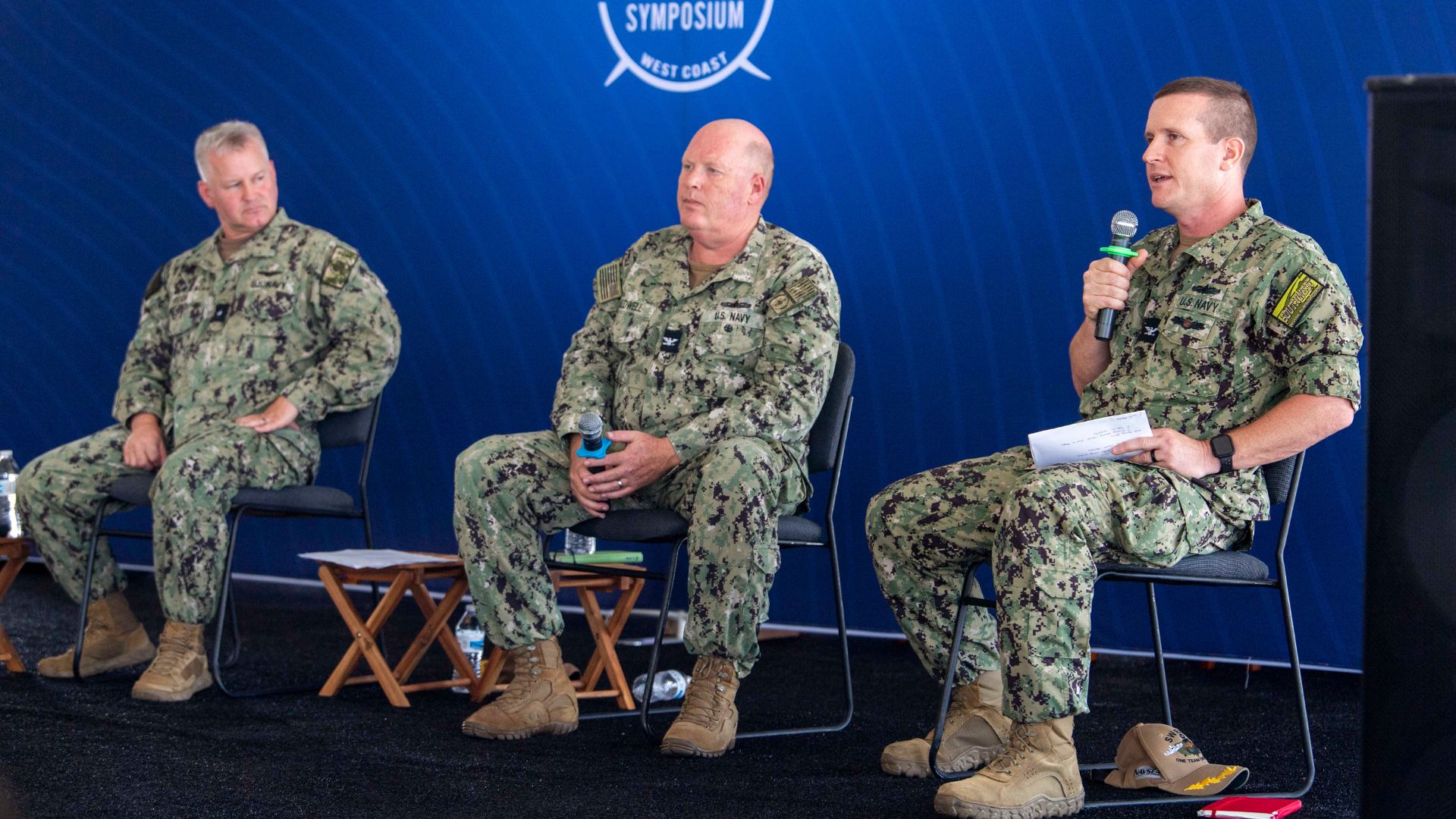
At the end of the day, the Navy’s strength has always been its people—the sailors, officers, and leaders who are committed to serving with honor and integrity.
Let’s make sure our policies and practices reflect that same commitment.
The future of our fleet—and the safety of our nation—depends on it.
—
Disclaimer: SOFREP utilizes AI for image generation and article research. Occasionally, it’s like handing a chimpanzee the keys to your liquor cabinet. It’s not always perfect and if a mistake is made, we own up to it full stop. In a world where information comes at us in tidal waves, it is an important tool that helps us sift through the brass for live rounds.








COMMENTS