

Strategic Shift: Troop Relocation and Diplomatic Breakthroughs
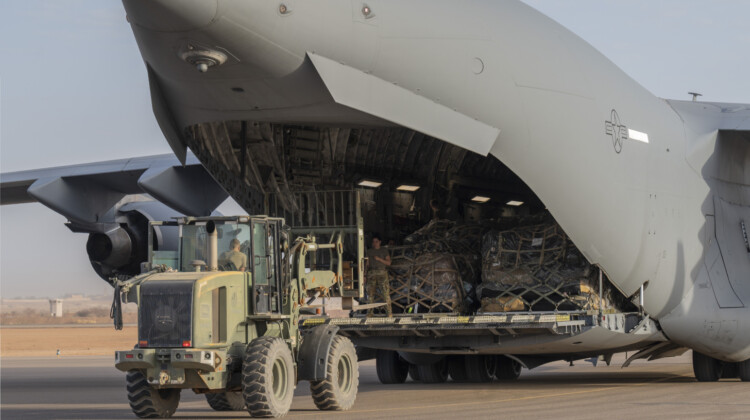
Over 1,000 American troops and sophisticated military equipment have been relocated from Air Base 101 near the capital, Niamey, to Air Base 201 in Agadez.
General James Hecker, the top Air Force commander for Europe and Africa, shed light on the diplomatic efforts that enabled the resumption of ISR missions.
Through negotiations with the junta, the US managed to restart some intelligence and surveillance missions, albeit not at full capacity.
“For a while, we weren’t doing any missions on the bases; they pretty much closed down the airfields,” General Hecker explained. “Through the diplomatic process, we are now doing a large amount of missions that we were doing before.”
Earlier this month, the Pentagon announced a notable precautionary measure, including repositioning troops to an air base further north.
US-Niger Relations and Regional Stability
The United States established diplomatic relations with Niger in the 1960s following the latter nation’s independence from France. Throughout the years, US-Niger relations have remained close and friendly. Niger has faced political challenges, with a military junta seizing power in 2010, leading to subsequent efforts to strengthen democratic institutions.
Niger’s strategic location has made it a critical player in regional efforts to counter terrorism and promote stability. Challenges stemming from neighboring countries, such as Libya, the Lake Chad Region, and Mali, have posed a continuous threat to Niger’s stability, complicating efforts to improve governance, human rights, and economic development.
US foreign assistance to Niger plays a vital role in maintaining stability in a country prone to political volatility, terrorism, and regional instability. Key areas of assistance include food security, counterterrorism capacity building, and security sector reform, among many others.
Diplomatic Tensions and the French Ambassador’s Ordeal
While the resumption of ISR missions signals progress, diplomatic tensions in Niger persist.
French President Emmanuel Macron recently revealed that the French ambassador to Niger, Sylvain Itte, is essentially being “held hostage” at the French embassy in Niamey. Macron asserted that on top of not being able to go out, the military junta obstructed any food deliveries into the embassy, forcing the ambassador to subsist on military rations.
The junta ruling Niger ordered Ambassador Itte to leave the country and subsequently revoked his visa, but the diplomat remained in place. French authorities have refused to recognize the junta’s rule.
President Macron, while emphasizing the legitimacy of ousted Niger President Mohamed Bazoum, pledged to work in alignment with ousted President Bazoum’s decisions regarding the ambassador’s return.
Meanwhile, French Foreign Minister Catherine Colonna confirmed that Ambassador Itte continues to work, offering essential diplomatic support through his team.
“[Itte] is working, I can confirm that, and he is very useful through his contacts, his team, there is still a small team with him,” Colonna told reporters.
She also made it clear that his return to France ultimately hinges on President Macron’s decision.
~
As the United States navigates its renewed ISR missions in Niger and the evolving political landscape, it must tread carefully to protect its interests, support regional stability, and respect the sovereignty of the host nation. The delicate balance between force protection, diplomatic relations, and regional cooperation remains a dynamic challenge in this critical region of West Africa.








COMMENTS