

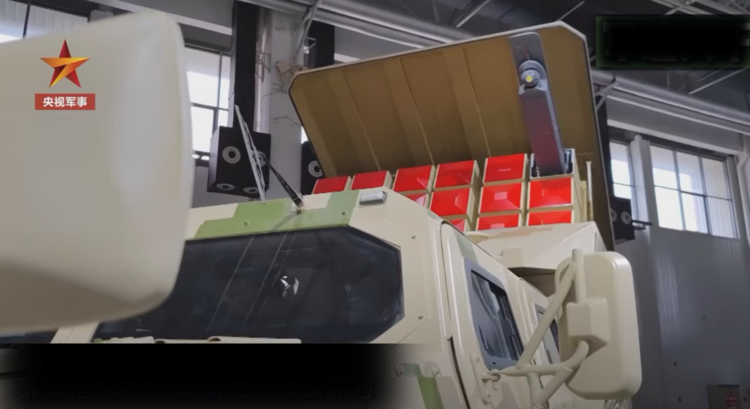
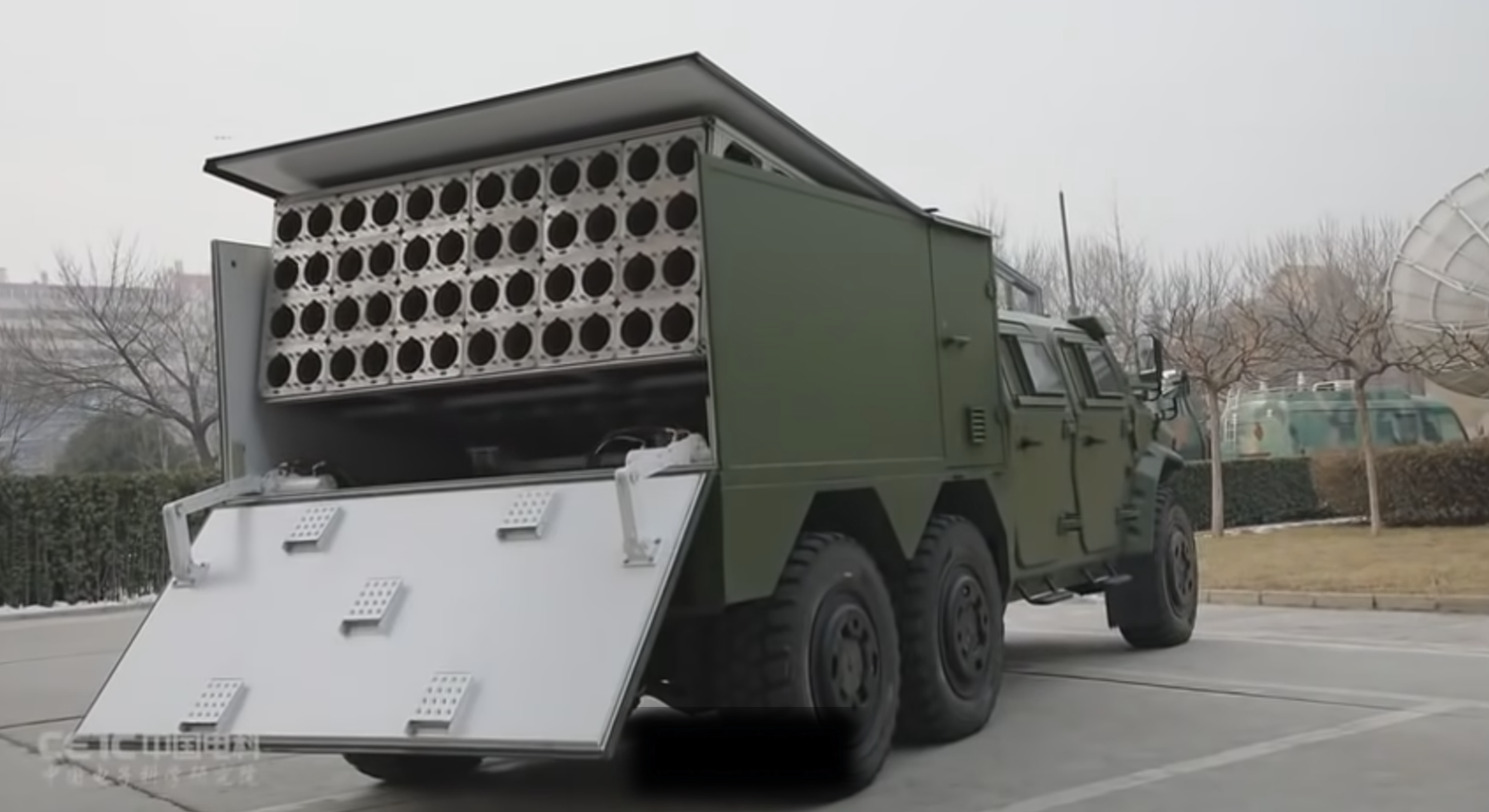
In another report by CCTV last month, it said that the People’s Liberation Army (PLA) Air Force planned to use both manned and unmanned equipment to boost its swarming capabilities. Accordingly, it will utilize its H-6K Bomber as a platform to launch four LJ-1 drones for aerial targets. Meanwhile, some experts speculate that Beijing intends to team up its stealth J-20 fighter jets with unmanned drones.
The H-6K bomber is a variant of the Xian H-6 twin-engine jet bomber developed in the late 1950s for the PLA Air Force. Introduced during China’s 60th anniversary, the H-6K aircraft is identified as a strategic bomber capable of long-range and stand-off attacks in addition to its nuclear strike capabilities. On the other hand, the LJ-1 drone is best known as one of China’s loyal UAV wingmen. It is a high subsonic unmanned drone with high mobility, long endurance, stealth, and recoverability (recovery parachute and airbag), and is capable of simulating maneuverability and supports different payloads such as active self-defense jamming equipment, infrared jamming decoy dispensing device, and infrared target simulator, among many others.
The United States has been working on the development of its offensive drone swarm capabilities. The US Army, in particular, demonstrated in September the coordinated quadcopter swarm drones in a training exercise held in Fort Irwin, California. The National Training Control has also recognized the vital role of drones on the battlefield. During the simulation, the quadcopters were rigged with bombs which would then be dropped into ground vehicles like tanks and High Mobility Multipurpose Wheeled Vehicles (Humvees), resulting in an accurate and highly lethal attack. Not to mention the quiet and low-flying capabilities of quadcopters, making them harder to detect by conventional radar systems. Last year, the US Army also kickstarted the development of a high-power microwave capability to counter and destroy small UAV drone threats—always moving three steps ahead of its adversaries in the unmanned munition game.
The US Navy has also shown interest in acquiring its own swarm, small drones intended to overwhelm defenses with a simultaneous attack. According to MIT Technology Review, the service branch is “working on ways to build, deploy, and control thousands of small drones that are able to flock together to overwhelm anti-aircraft defenses with sheer numbers.”
The budget document came months after the conflict in Ukraine happened, as it has proven how valuable small drones have become in modern warfare in terms of executing ISR missions, guiding artillery attacks, and accurately bombarding enemy tanks. However, one of the challenges in operating UAVs was operator limitation, which the USN wished to address by having a sophisticated single control system over hundreds, if not thousands, of drones.
While the project is still in the works, the “Super Swarm” development would become another game changer on the battlefield and a definite edge for the US over its superpower counterparts.








COMMENTS