


“I believe that this is precisely an issue where it would be a grave mistake for Germany to take a special role and a special path,” he added.
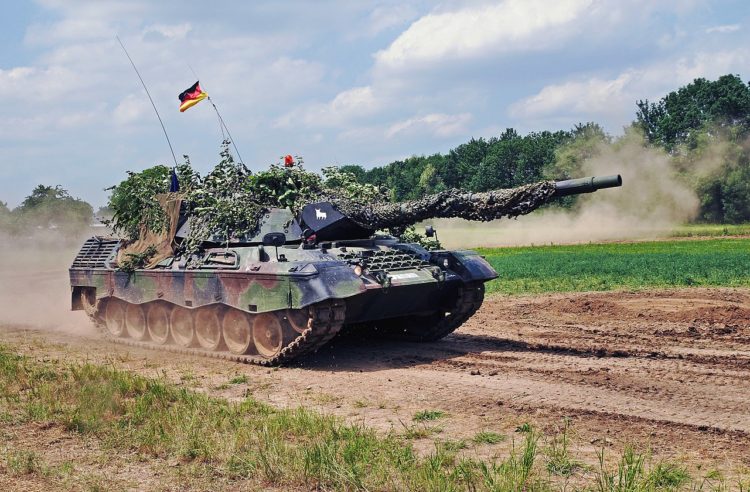
The German Chancellor received backlash from the Greens and the Free Democratic Party because of his statement and apparent hesitation. The Chair of the Bundestag’s European Affairs Committee, Anton Hofreiter, stated that Germany should show leadership in both the EU and NATO. He also added that he favored sending heavy weaponry to Ukraine and that the German cabinet should repeal its decision to not supply Ukraine with heavy weapons.
Germany is being accused of a certain duplicity in agreeing to send arms to Ukraine while also working to maintain good relations with Russia which has a stranglehold on Germany’s energy supplies in terms of gas, diesel, and natural gas. In the months and years preceding the latest invasion of Ukraine, Germany was the country most inclined to take Russia’s side in matters of dispute believing that Putin could be deterred with talks and treaties rather than arms and sanctions. Echos of that posture remain in Germany still as it goes back and forth internally over how much support to give to Ukraine and salvage good relations with Russia. For a country with the size and influence it enjoys in the EU and NATO it can hamstring efforts by smaller nations to support Ukraine themselves.
While the German Chancellor’s carefulness may be prudent, it is important to note that Germany says it is not “rushing ahead,” as if multiple countries have already sent heavy weaponry to Ukraine. The largest contribution to Ukraine’s defense coming from the United States. This lopsided contribution may express the EU’s reluctance to support Ukraine more than anything else. The countries of the EU combined have a larger population and economy than the US does alone. These countries also have a sizeable armaments industry capable of making ships, tanks, planes, drones, missiles, and any other weapon of war one could need. Thus far, the contributions to the defense of Ukraine are a fraction of what the US has contributed and much of it is equipment the US has agreed to replace with new weapons. While individual countries in the EU may be limited in what they could send to Ukraine, collectively, the EU is an arsenal of arms manufacturing that could equip Ukraine unaided by the US if it had the political will to do so. In 2020, arms exports contracts held by EU counties amounted to 167 billion Euros. By comparison, the US sold $10.6 billion in arms in 2021.
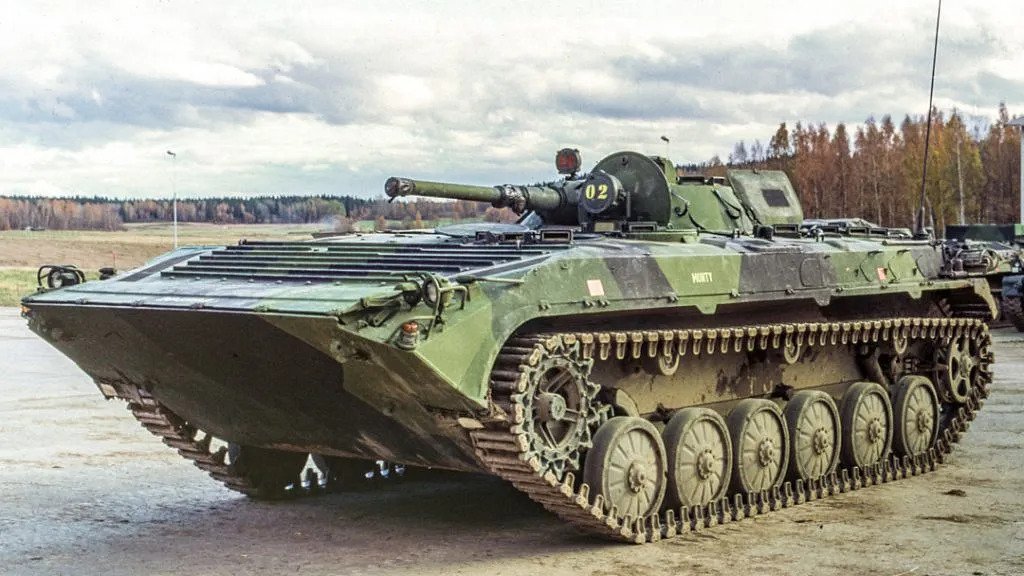
One of the most recent transfers also involved them as the Germans approved the transfer of some 56 Pbv-501 infantry fighting vehicles (originally BMP-1s) from the Czech Republic to Ukraine. These are reworked Russian armored fighting vehicles and are not state of the art by any means.
The United Kingdom has also been planning to send Ukraine some of its Mastiff armored vehicles. Australia is also set to donate some 20 Bushmasters to Kyiv as well. Talks of MiG-29 fighter jets being donated by Slovakia are also in the works after they had donated their S-300 air defense systems to Ukraine.
Last April 13th, President Biden had announced the approval of an $800 million military assistance package bound for Ukraine, which included not just 18 155mm Howitzers, Javelins, and Switchblade drones, but also 11 Mi-17 helicopters, 200 M113 Armored Personnel Carriers, and 100 Armored High Mobility Multipurpose Wheeled Vehicles.
In February, the German government has also given some 1,000 anti-tank weapons and 500 Stinger anti-aircraft defense systems to Ukraine. They have also authorized the Netherlands to send 400 rocket-propelled grenade launchers to Kyiv and spoke to Estonia to send Ukraine 9 howitzers.








COMMENTS