

Pulling Inspiration from Big Bro Russia
Following the news report, analysts have noticed the similarities between North Korea’s Haeil and Russia’s nuclear-capable Poseidon torpedo.
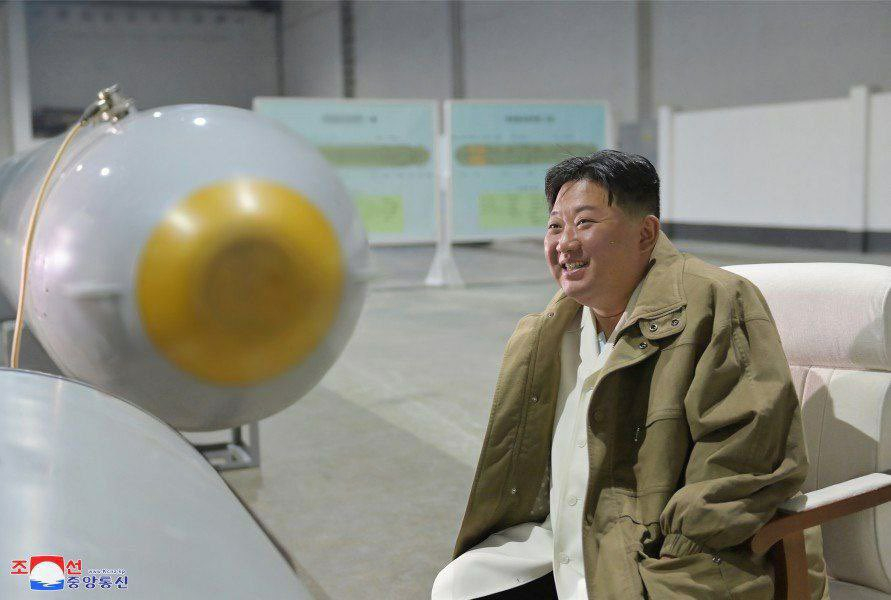
State media says Kim Jong Un oversaw three days of weapons tests, including of an "unmanned underwater nuclear attacking vessel" aimed at "creating superpower radioactive tidal waves with underwater explosion." pic.twitter.com/8GCFPPbEuO
— William Gallo (@GalloVOA) March 23, 2023
Like the deadly concept of Heil, the Poseidon torpedo is also designed to cause violent, radioactive explosions in coastal regions. However, some experts pointed out that, unlike the Moscow-built UAV launched via submarines, Pyongyang’s suicide underwater drone is supposedly conventionally propelled.
While this recent test launch of a nuclear-capable weapon may seem another mind-game kicker for the communist North, experts still think this should not be taken lightly, and a review of defense tactics around suicide drones should be considered.
The Poseidon UAV, formerly known as Status-6, is a submarine-launched, nuclear-armed weapon capable of carrying conventional and nuclear warheads developed by Russia as part of Vladimir Putin’s strategic weaponry unveiled in 2018.
It was originally part of a grand scheme by former Soviet leader Josef Stalin to have such a weapon capable of destroying the shores of the United States during the Cold War era. But it wasn’t until a half-century later that the nuclear torpedo came to fruition.
Earlier this year, Reuters reported that Russia would produce the first batch of the 24-meter Poseidon, citing Moscow’s state news agency TASS. It added that the super torpedo is set to be launched via the Belgorod nuclear submarine (K-329), a purposely-built craft by the Sevmash Shipyard.
The footage below allegedly shows a field test of the Poseidon torpedo.
More Missile Tests and Propaganda
Despite firm reiterations from South Korea and the United States that its joint military drills were solely defensive, North Korea asserted that these exercises were “a prelude to an invasion.”
As the allies concluded their regular springtime drills, dubbed Freedom Shield 23, last week Pyongyang on the other hand, has been busy with spreading its propaganda against the amphibious landing exercise. Apart from this, the latter communist country has also been conducting missile tests, serving as a blatant warning that it can attack US cities if they want to.
Various propaganda has been run by the North’s media outlets, with one outright rejecting the allies’ assertion that the drills were purely defensive and others stressing that the rising tensions in the region are being stirred by “hostile” forces, including the United States.








COMMENTS