

Classified Details and the Importance of Adaptability
However, given the sensitive nature of electronic warfare capabilities, intricate details pertaining to the system’s performance and programming remain undisclosed.
It is a standard protocol to withhold such information to prevent compromise of sensitive technologies.
The development and deployment of the AOEW system by the US military mark a pivotal effort to rejuvenate its electronic warfare arsenal, which has experienced relative stagnation since the post-Cold War era.
Manipulation of the electromagnetic spectrum is critical for various military functions, including weapons guidance, secure communications, and thwarting enemy observations.
As geopolitical tensions rise, particularly in potential conflicts involving nations like Russia or China, control over the electromagnetic spectrum becomes increasingly crucial.
Enhancing Ship Defense and Integration with Naval Vessels
The primary objective of the AOEW system is to extend a ship’s defense capabilities, addressing limitations imposed by restricted line of sight or deliberate maneuvers.
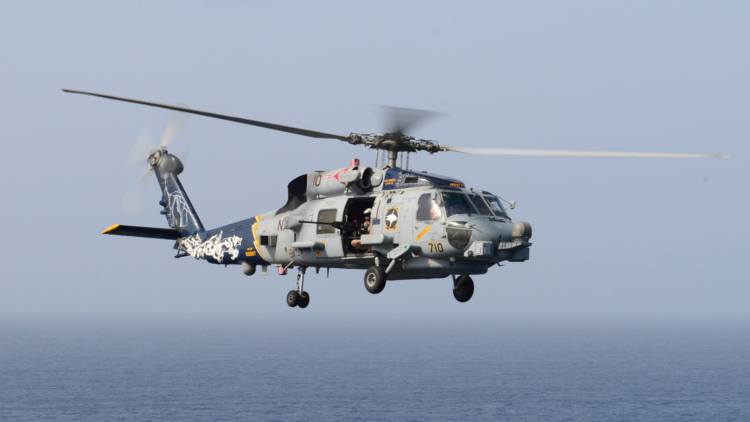
Notably, the system boasts independent functionality aboard helicopters such as the MH-60R and the MH-60S.
It is designed to integrate seamlessly with other systems aboard naval vessels, enhancing overall defense mechanisms.
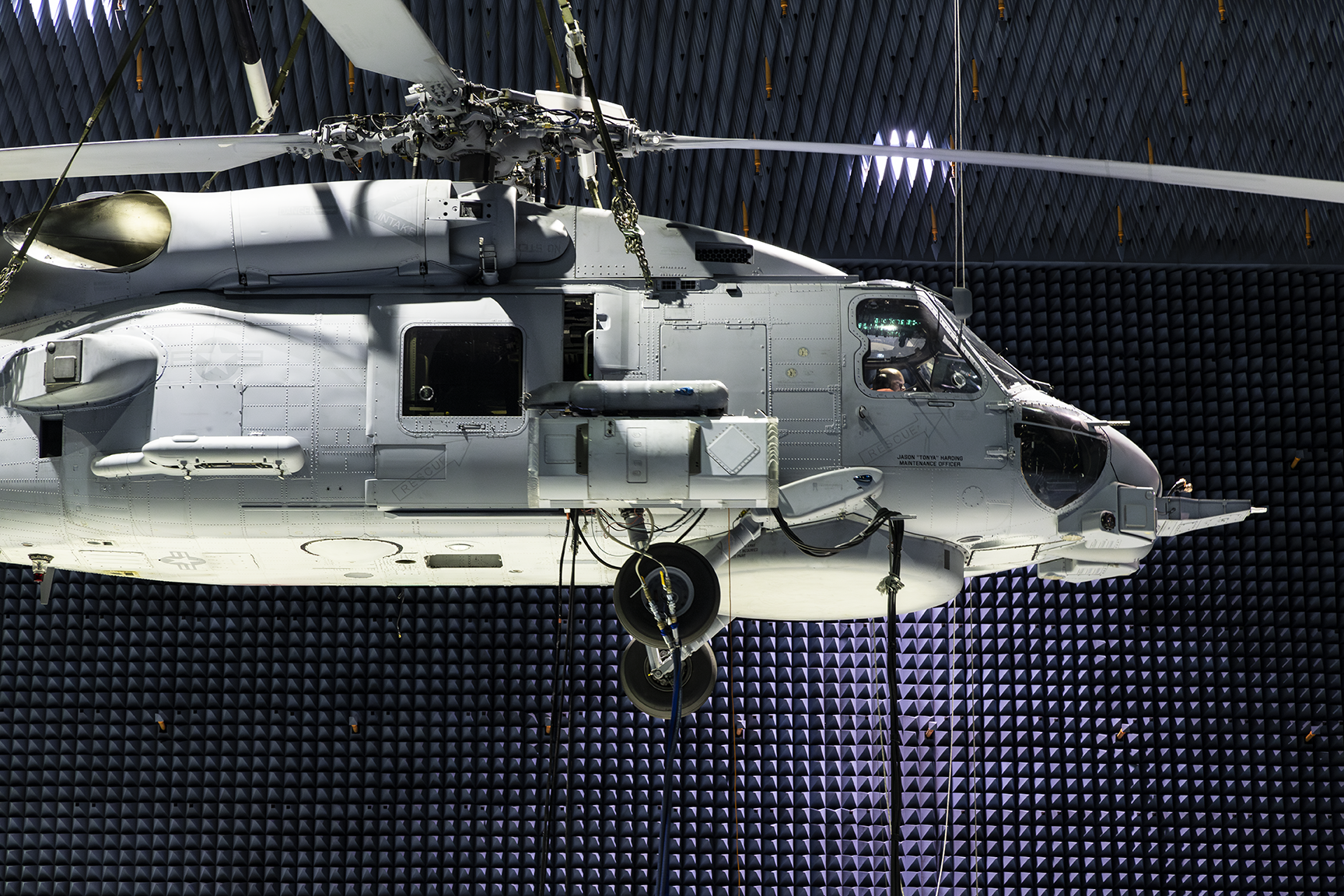
A quick recap: The AOEW program, dating back to 2011, has evolved significantly to address the critical need for robust defense against anti-ship missile threats.
In a report by The War Zone, the original core objective aimed at deploying multiple ship-launched, long-duration platforms equipped with active or passive EW payloads.
These platforms were intended to collaborate with onboard EW systems, amplifying battle group protection against present and future anti-ship missile threats.
The AOEW Active Mission Payload (AMP) AN/ALQ-248 system, tailored for integration with the US Navy’s MH-60R and MR-60S Seahawks, holds tremendous promise.
The US Navy’s robust fleet boasts more than 500 twin turboshaft engine, multi-mission helicopters, modeled after the US Army’s UH-60 Blackhawk, currently in active service.
Renowned for its versatility, the Seahawk’s repertoire spans anti-submarine warfare (ASW), anti-surface warfare (ASUW), naval special warfare (NSW) insertion, search and rescue (SAR), combat search and rescue (CSAR), vertical replenishment (VERTREP), and medical evacuation (MEDEVAC) missions.
The potential addition of AOEW pods signifies a transformative upgrade, integrating advanced electronic warfare capabilities into its already diverse skill set.
This enhancement could fortify the Seahawk’s capabilities, further solidifying its pivotal role across multifaceted operational domains.
.@USNavy and @LockheedMartin successfully test key capabilities of advanced off-board electronic warfare systemhttps://t.co/D5K2vT5EIn pic.twitter.com/yOuNyx5Y3a
— Fly High Aeromedia (@FHAeromedia) December 12, 2023
Future Plans and Deliverables
In a press release, Viergutz highlighted the system’s adaptive nature, describing it as a programmable entity capable of evolving and deploying new techniques in response to evolving threats.
The AOEW system’s adaptability ensures its relevance in dynamic combat scenarios, equipped to effectively confront an ever-changing threat landscape.
Previously evaluated at Lockheed’s facility in Syracuse, New York, the AOEW system has now undergone successful trials aboard helicopters.
This series of successful tests includes the following:
- AOEW can be fully integrated with Aegis Baseline 9C.2+ and the Surface Warfare Electronic Warfare Improvement Program Block II;
- The system can work independently or with other systems onboard ships and other assets;
- AOEW leverages open-systems architected solutions, allowing for rapid upgrades, interoperability, reduced lifecycle costs, and prompt insertion of new hardware.
- The architecture and technologies of AOEW lay the groundwork to deliver similar capabilities on other assets, such as small ships or unmanned aerial and surface vehicles.
The company plans further testing in 2024, leveraging feedback to refine the system further.
Lockheed anticipates the delivery of the initial AOEW units in the upcoming year, marking a crucial step toward bolstering the US military’s electronic warfare capabilities.
Lockheed Martin’s Role and Significance
Lockheed Martin stands as the foremost government contractor globally in terms of defense-related revenue, earning a substantial $63.3 billion in 2022, according to Defense New Top 100 analysis.
The company’s commitment to advancing cutting-edge defense technology underscores its pivotal role in shaping the future of military capabilities.
As geopolitical tensions evolve, innovations like the AOEW system play a pivotal role in ensuring the readiness and resilience of military forces against emerging threats, securing an edge in the increasingly complex landscape of modern warfare.
—
You might want to check this book out:










COMMENTS