

The 52nd Defense Battalion was formed as a sister unit to the 51st after an influx of recruits at Montford Point during World War II.
Black Marines first saw combat with the Ammunition and Depot Companies in the battles of Saipan, Guam, and Peleliu from 1943-1945. Pvt. Kenneth Tibbs was the first Montford Point Marine to give his life in combat on June 15, 1944. By war’s end, 87 Montford Point Marines were killed in action, according to the U.S. Marine Corps Museum.
Only 1,500 Montford Point Marines remained on active duty after the war. The remainder of the 20,000 Marines trained at Montford Point received discharge orders.
On Nov. 10, 1945, Frederick C. Branch made history as the first Black commissioned officer in the Marine Corps Reserves. He is still honored today with a scholarship in his name, awarded to individuals who are attending or are planning to attend historically Black colleges or universities.
In 1948, John Rudder, a prior-enlisted man, was commissioned as the first Black active-duty commissioned officer. That same year, President Harry Truman issued Executive Order 9981, establishing equality of treatment and opportunity in the military regardless of race.
Black Marines reached many milestones in the following years, including the first Black female Marine, Annie Graham in 1949, and the first Black aviator, Frank Petersen in 1950. Petersen would later become the first Black Marine Corps Brigadier General in 1979. On Christmas Eve of 1955, Edgar Huff became the first Black Marine to earn the rank of Sgt. Maj, the U.S. Marine Corps History Division notes.
James Anderson Jr., Rodney Davis, Ralph Johnson, Oscar Austin, and Robert Jenkins Jr. were the first five Black Marine Medal of Honor recipients, receiving the Medals posthumously from 1967-1969.
According to the Marine Corps History Division, Montford Point was renamed to Camp Gilbert H. Johnson in April 1974 in honor of Sgt. Maj. Gilbert Johnson, one of the first Black Marines and alumni of Montford Point. Johnson had served for six years in the Army and eight years in the Navy, and upon the issue of Executive Order 8802, Johnson transferred to the Marine Corps, serving for 17 years.
Johnson was one of only two Black Sergeants Maj. to serve in World War II. The other was Sgt. Maj. Edgar Huff, who was Johnson’s brother-in-law. Camp Johnson was the first military installation named after a Black man.
Alford McMichael became the first Black Sgt. Maj. of the Marine Corps in 1999, serving in the role for almost four years. Two years later, Vernice Armour became the first Black female pilot in 2001, and two years after that, she became the first Black female combat pilot, after she flew with Marine Light Attack Helicopter Squadron (HMLA) 169 in the invasion of Iraq.
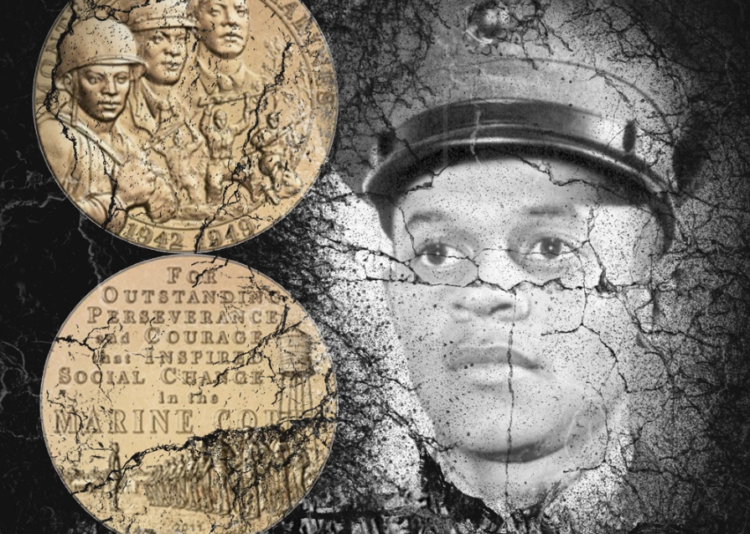
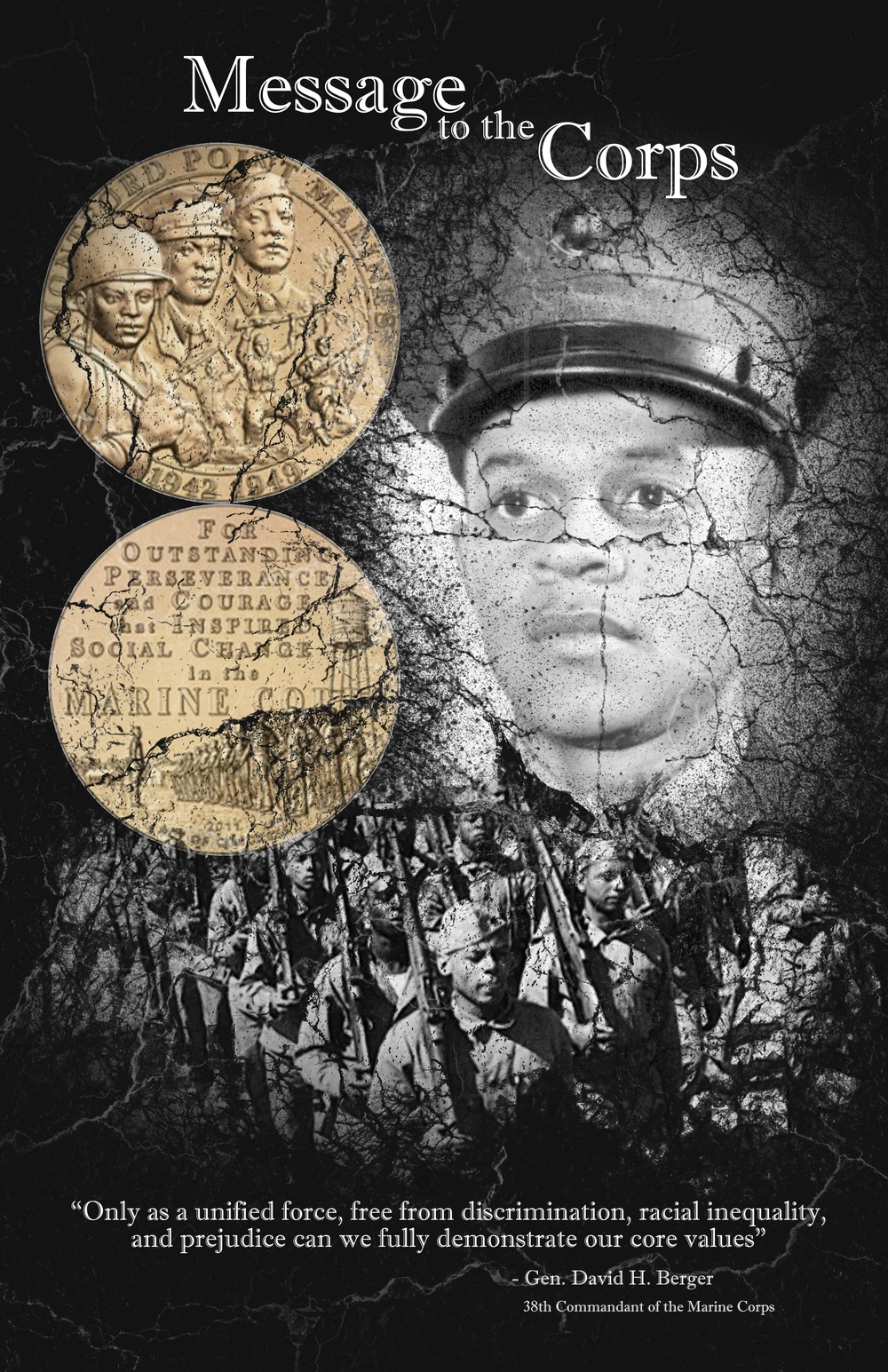
Marine Corps curriculum adapted to include the struggles, stories, and history of Montford Point Marines in 2011. The following year, the Montford Point Marines received a collective Congressional Gold Medal, adorned with images of the Marines and the phrase “For outstanding perseverance and courage that inspired social change in the Marine Corps.”
In April 2020, Gen. David Berger, 38th commandant of the Marine Corps, banned the display of confederate flags on all Marine Corps installations. “Only as a unified force, free from discrimination, racial inequality, and prejudice can we fully demonstrate our core values,” Berger wrote in a public statement.
Black Marines have a significant role in the Marine Corps since 1776, and continue to be an integral part of the Marine Corps today. The U.S. benefited greatly from the contributions and sacrifices of Black Marines and will continue to be molded by them far into the future.
***
This piece is written by Cpl. Seth Rosenberg from the I MEF Information Group. Want to feature your story? Reach out to us at [email protected].








COMMENTS