

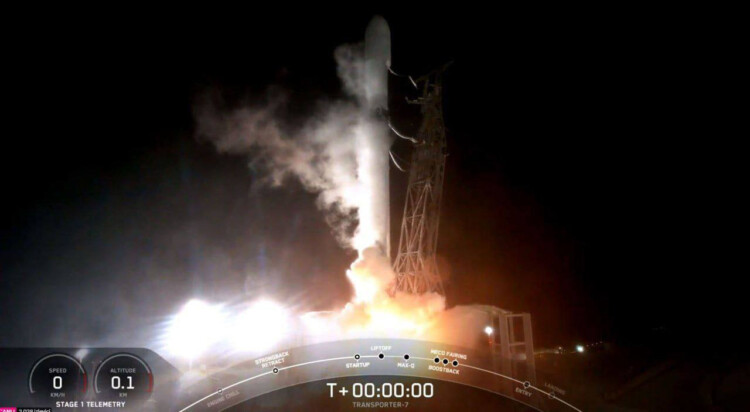
He noted the Turkish-made satellite as a strategically significant investment, primarily because most developed countries have invested more in claiming space in space.
“With the İMECE satellite, we have manufactured every subsystem required for an observation satellite by ourselves,” he said.
First-Ever Turkish-Built Satellite
The İMECE satellite program kickstarted in early 2017, and by mid-2020, its manufacturer completed the assembly integration of the spacecraft’s thermal and structural efficiency module before a series of field trials ensued.
According to Ankara’s Directorate of Communications, the satellite’s design intends to accomplish up to five years of mission life that will follow a geosynchronous orbit while taking high-resolution imagery using a multispectral camera across the globe.
This equipped camera can capture an area of 13.9 by 16.2 kilometers (8.6×10 miles) in a single frame, with a resolution of about 4 meters (13 feet) and a weight of 700 kilograms (1,543 pounds).
With the successful launch, İMECE is now the first-ever Turkish-constructed and the third Turkish-owned satellite to reach space after Ankara’s Göktürk-1 and Göktürk-2 military satellites, which were all partly built with imported technologies.
Exploring the Heights Beyond Earth
Recognizing the value of having to establish an outer space presence, Turkey began working on developing its space program. By late 2018, the country successfully founded its national aerospace research agency under its Ministry of Industry and Technology in collaboration with TÜBİTAK UZAY.
In February 2021, Erdogan formally announced its goals for its national space program, including a ten-year integrated “vision, strategy, goals, and projects in the field of space policies.”
If plans go according to its set timeline, Turkey is expected to send its first native astronaut into space to accomplish a science mission and a rocket launch to the moon sometime this year.
Nevertheless, the ten goals of the Turkish Space Agency, also known as Türkiye Uzay Ajansı (TUA), include the following:
- Moon mission using a Turkish built, hybrid rocket to mark the country’s 100th anniversary as a Republic;
- Domestic satellite;
- Regional positioning and timing system;
- Spaceport operation to support future space missions;
- Space weather or meteorology;
- Astronomical observations and space object tracking;
- Expanding its space industry;
- Space technologies development zone for both domestic and foreign investors;
- Space awareness, including investment in space and aviation education; and
- A Turkish astronaut.
Ankara intends to send a delegate to the International Space Station (ISS) as part of its mission, in addition to its last stated objective.
By May 2022, the search for a competent Turkish astronaut candidate to be sent on the country’s first space mission officially began, with an initial expected flight schedule as early as the first half of 2023, Daily Sabah reported last year.
Turkey and US-based commercial space company Axiom Space signed a historic agreement four months later. The chosen Turkish astronaut will undergo rigorous training under the latter company, expanding the country’s capability to space exploration, including scientific research in a microgravity environment.
“This mission is a part of Türkiye’s ambitious 10-year space road map, which includes missions to the low-Earth orbit and the Moon as well as developing internationally viable satellite systems.” said Serdar Hüseyin Yıldırım, TUA’s president and chairman of the board, during the signing event on September 19, 2022.








COMMENTS