
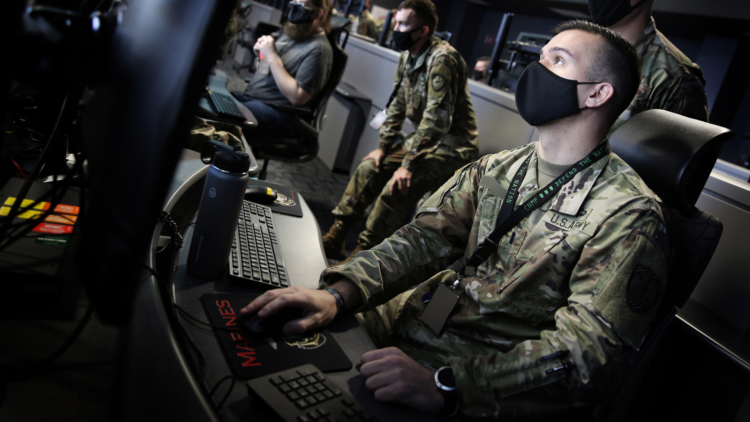
This development comes amidst a broader conversation regarding the future of cyber warfare within the Department of Defense. A recent proposal, unanimously passed by the House Armed Services Committee, calls for exploring the creation of a separate Cyber Force branch.
While the final decision rests with Congress, the Army’s assumption of the CCSA role signifies a potential step towards a more centralized cyberwarfare structure.
Beyond Streamlining Operations: Potential Implications
The Army’s takeover of the CCSA role for CYBERCOM has far-reaching implications beyond streamlining operations.
Here are some key areas to consider:
Increased Efficiency and Synergy
By consolidating administrative and logistical functions under the Army, CYBERCOM can potentially achieve greater efficiency and synergy.
The Army’s established infrastructure and experience in managing large workforces can translate to smoother operations for CYBERCOM.
Centralization of Cyberwarfare Efforts
This move could be a stepping stone towards a centralized cyberwarfare structure. With the Army now handling support for CYBERCOM, the groundwork might be laid for a future unified Cyber Force, as proposed by the House committee.
Evolving Inter-service Dynamics
The shift raises questions about inter-service dynamics within the Department of Defense.
While the Army takes the lead in supporting CYBERCOM, the other branches, particularly the Air Force and Navy, with their established cyber capabilities, will likely retain significant roles in offensive and defensive cyber operations.
Impact on Civilian Workforce
While the official statements emphasize a smooth transition for civilian employees, long-term adjustments and potential cultural shifts within the workforce cannot be entirely discounted.
Ongoing monitoring and clear communication will be crucial in maintaining morale and productivity.
The Future of US Cyber Warfare
Only time will tell how this historic shift will impact US Cyber Command’s effectiveness. However, one thing remains certain: the US military is actively bolstering its cyberwarfare capabilities, ensuring continued dominance in the ever-evolving digital battlefield.
“Change is constant. Change is good. Without it, we’re stagnant. This change brings a highly talented workforce into the Army footprint,” said Jones.
This move positions the Army as a central pillar in US cyber defense, and its success will be closely watched as the nation navigates the complexities of cyber threats and potential conflicts in the digital domain.
—
Disclaimer: SOFREP utilizes AI for image generation and article research. Occasionally, it’s like handing a chimpanzee the keys to your liquor cabinet. It’s not always perfect and if a mistake is made, we own up to it full stop. In a world where information comes at us in tidal waves, it is an important tool that helps us sift through the brass for live rounds.








COMMENTS